Cat feeders · Choose by your needs
Choose a feeder for meals at set times
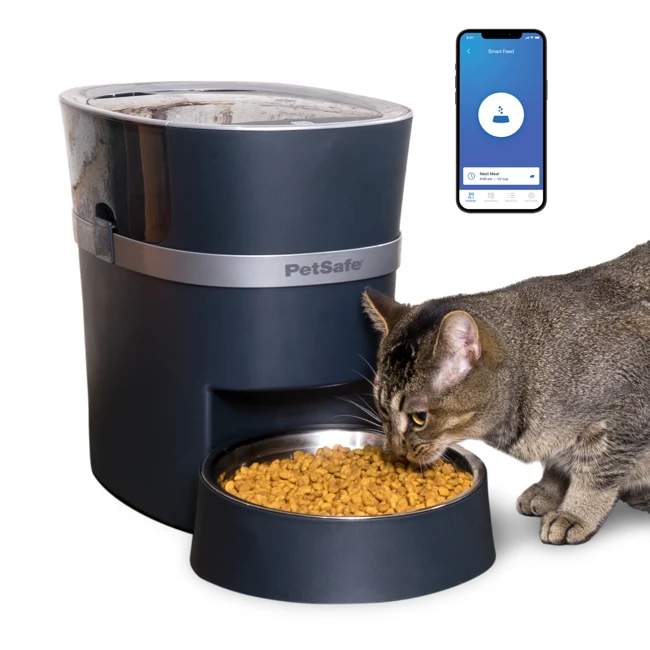
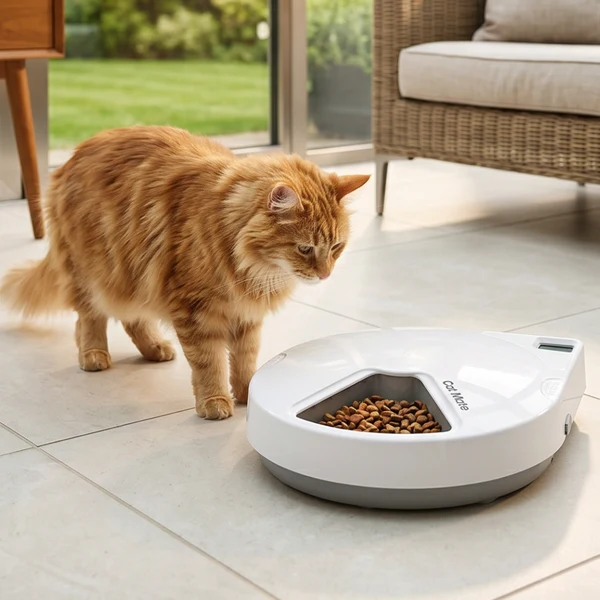
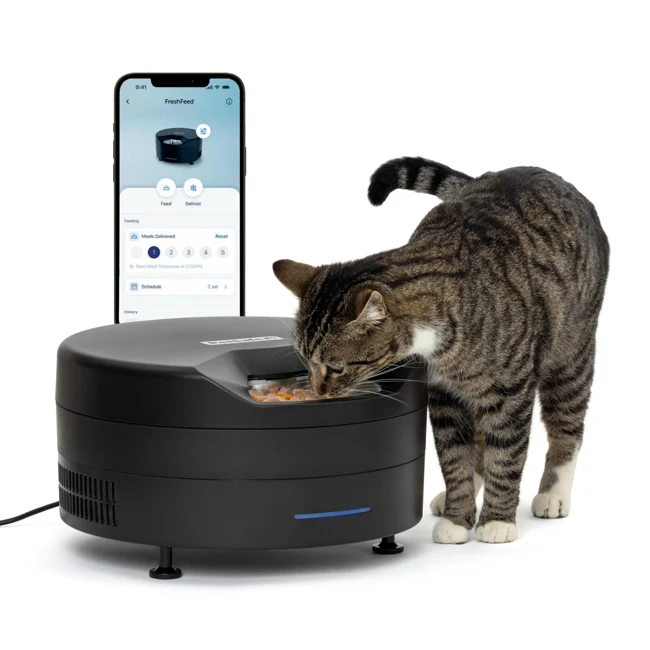
If the main need is meals at set times but you have not settled on food, there is no useful one-size-fits-all pick: dry-food hoppers and prepared wet-food trays work differently. A C3000 offers a three-time local dry-food routine, while Smart Feed offers twelve app-managed dry meals; for wet trays, C500 provides four later ice-pack servings and FreshFeed five later openings with powered cooling. Choose food and cooling before relying on a specific schedule.
Comparison updated 29 October 2026.
First decide how the food will be served
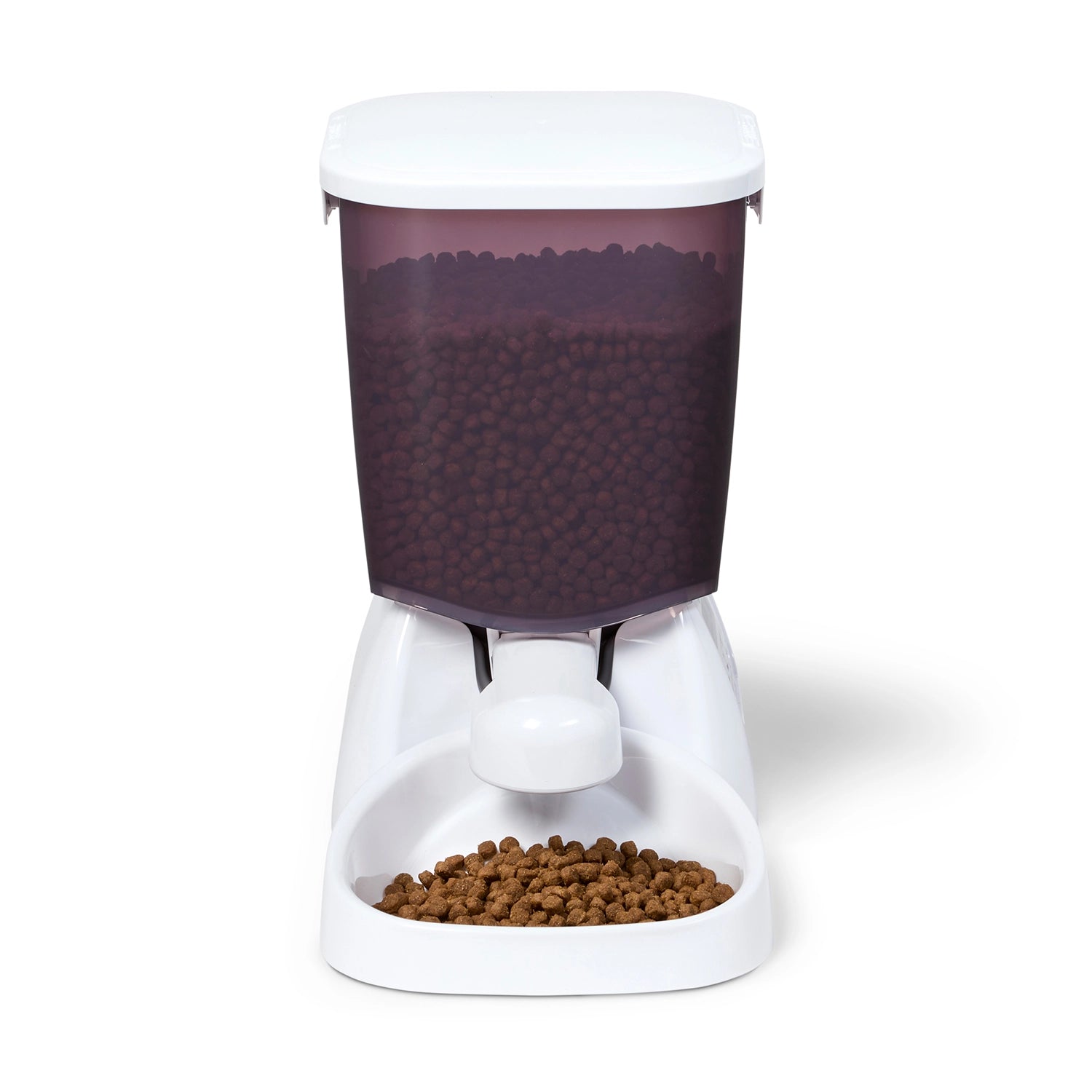
For meals at set times, choose the feeder around the food flow: a dry hopper meters kibble from storage, while a prepared wet-food tray opens a portion you loaded. If the food is still undecided, compare only the documented differences: C3000 offers three locally set dry appointments, Smart Feed offers twelve app-managed dry meals, C500 offers four later wet-or-dry openings with ice packs, and FreshFeed offers five later wet-food openings with powered cooling. Set the food type before relying on a particular model or schedule.
Do not compare compartment labels with meal limits
The C3000 has three independent clock appointments, and Frequent Feed is a separate distribution mode. C500 has five compartments but its manual treats one as the initial portion and supports four later programmed openings. FreshFeed likewise presents the first meal immediately and opens five later positions. Hopper appointment counts and filled-tray openings describe different routines; neither gives a storage-duration estimate.
Choose a food-specific route when the diet is known
For dry kibble, compare the hopper's confirmed diameter range, capacity unit, number of independent meals and whether you prefer on-device controls or an app. For wet food, decide whether powered cooling is essential or whether prepared ice packs are acceptable, then follow the exact room, serving and storage guidance. The dry-food and timed-wet-meal pages compare those narrower tasks without assuming that one feeder suits both.
Questions that change the choice
Which timed feeder should I choose if I have not decided between wet and dry food?
First choose the food and holding routine, because a dry hopper and a wet-food tray solve different tasks. C3000 is a dry-food example. PetSafe's Smart Feed page describes dry and semi-moist food, but that wording does not establish wet-food compatibility. C500 documents wet or dry portions, while FreshFeed is a cooled wet-food tray. A broad schedule shortlist is not proof that every model fits an undecided diet.
Does a bigger hopper mean it can schedule more meals?
No. Hopper volume is storage capacity, not the number of independently programmed releases. Tray slots also differ from timer settings: count future openings from the exact manual and treat the initially exposed serving separately.
Does a scheduled wet tray keep food safe until every opening?
A timer only controls when the tray opens. Follow the food label and the exact feeder's cooling, serving and cleaning instructions; do not infer a safe holding duration from a compartment count or cooling feature.
Sources for the comparison