
On this page
PIXI Vision for camera viewing and dual-band Wi-Fi
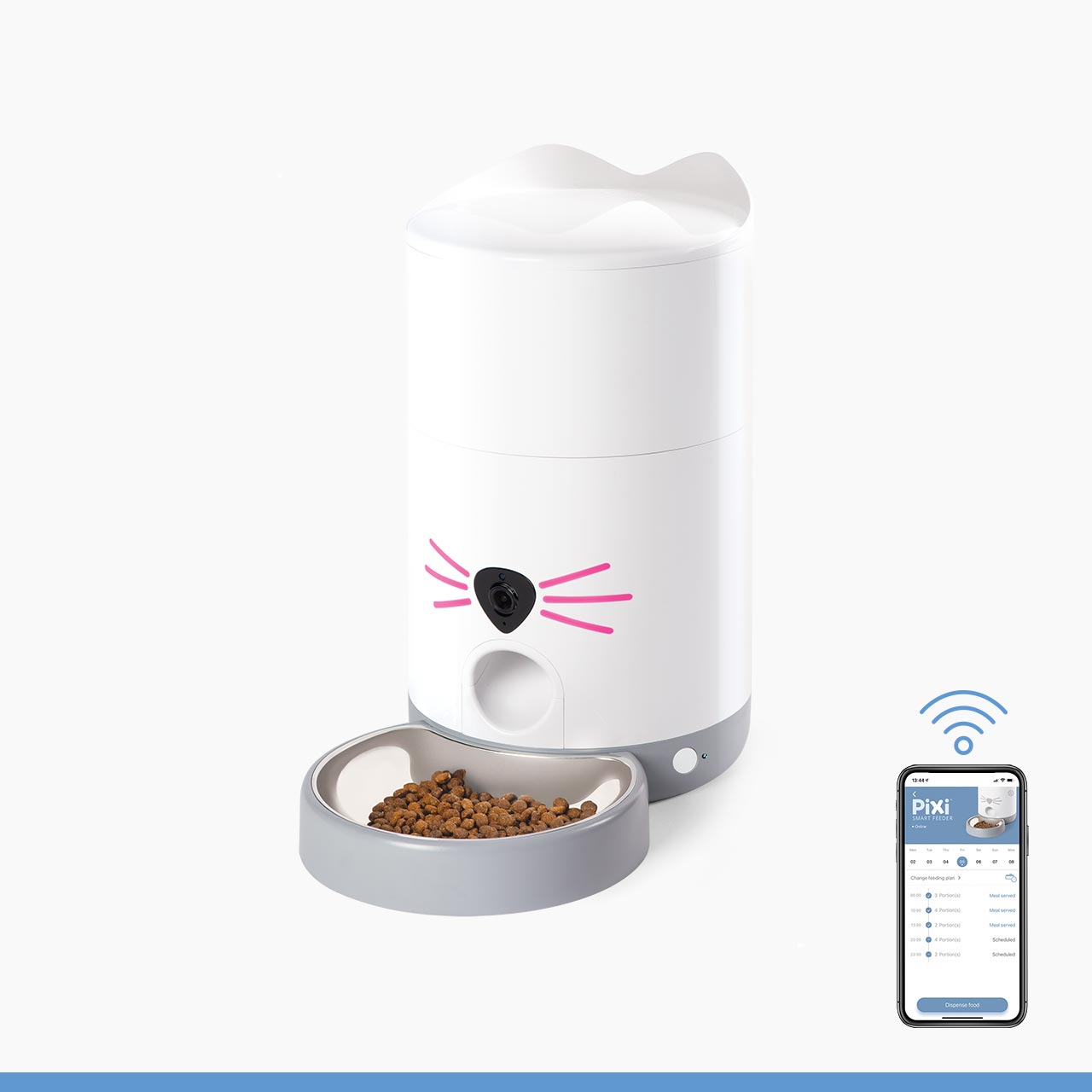
The exact 43753 dry-food Vision model combines an app schedule, camera and 2.4/5 GHz support. Automatic recording needs a separate microSD card, and feeding backup does not establish continuous video.
Your needs, this model
Does it fit your priorities?
Does this PIXI camera feeder support 5 GHz Wi-Fi?
The exact 43753 specification lists both 2.4 GHz and 5 GHz, unlike the ordinary 43752. Check the signal where the feeder will be positioned.
Explore this need in the finder →Will the backup batteries keep video running for two months?
Catit's approximate two-month estimate is stated without Wi-Fi features. It supports backup feeding as a separate claim, not two months of continuous remote viewing.
Explore this need in the finder →Will the camera stop another cat from eating this bowl's food?
A view of the bowl can reveal food stealing, but this model is not documented as a selective-access lid. Compare access-controlled feeders if preventing theft is essential.
Explore this need in the finder →The Catit PIXI Vision 43753 suits a dry-food routine where seeing the feeding area is worth adding a camera. Its useful distinctions from the ordinary PIXI Smart are video, two-way audio and documented dual-band Wi-Fi. It is still a single open bowl: observation does not provide selective access for an individual cat.
Decide what you want the camera to answer
Video is most useful for a concrete question: did food arrive, did the cat approach, or did a second pet take the serving? Place the unit so the bowl and approach are visible, then check that view at the times you normally feed. A recording of an animal beside the feeder is not a measured record of what it swallowed.
Catit's 43753 specification includes night vision and motion detection. These help you observe a routine without arranging a separate camera at the bowl. Think about the view before comparing headline video features: a doorway, a person's work area or a bright window may be more prominent than the feeding position.
Live viewing and automatic recordings have different requirements
The Vision manual distinguishes app-recorded pictures and video from automatic recordings. Automatic recording needs an additional microSD card, with a documented maximum of 256 GB. Include that in the package check if the reason for buying is to review meals later.
A useful first-day exercise is to trigger a feed while standing beside the appliance, check the live view, and then find the recording you expected. This tests the whole routine you intend to use, including storage and playback. Two-way audio can help you interact with the cat, but whether that is welcome depends on the animal; introduce unfamiliar sounds while you are there.
The feeding decision still starts with the food
This is a dry-food hopper with a roughly 2.9 L reservoir. Catit specifies a maximum pellet diameter or thickness of 9 mm and up to twelve scheduled meals daily. A wet-food or large-piece essential points to another format, regardless of how useful the camera looks.
Use several sample releases to check your food against the chosen portion setting. Keep that check separate from the daily meal count: twelve opportunities to feed do not make each delivered amount a measured nutritional target. The reservoir's volume also cannot guarantee a particular number of days between visits.
Network flexibility is a real difference from the ordinary PIXI
The Vision supports both 2.4 GHz and 5 GHz Wi-Fi; the ordinary 43752 documents 2.4 GHz only. This matters if a specific network band is essential. Check the signal at the final feeding location rather than treating support for a band as a guarantee of connection through every wall.
The side button can release food immediately and can be disabled through the app. Schedule setup and remote observation remain different tasks from a local manual release. Use the model-specific support instructions when setting up recording and alerts.
Choose backup for meals, and selective access for food stealing
Four C/LR14 batteries provide backup feeding. Catit's approximate two-month estimate is explicitly described without Wi-Fi features, so it is not a promise of two months of live monitoring. Keep the feeder plugged in for the normal connected routine and install backup cells for the separate outage requirement.
Shortlist the Vision when camera observation, app scheduling and compatible dry food belong together. For a cat whose food must remain protected from another animal, compare identity-access feeders. For prepared wet meals, compare a tray or powered-cooling design. The camera is a useful addition to the right feeder format; it does not replace choosing that format.
Key specifications
Key details at a glance
| Dry-food compatibility | Yes |
|---|---|
| Wet-food compatibility | No |
| Timed meal releases | Yes |
| App plans or food targets | Yes |
| Integrated camera | Yes |
| Routine battery operation | No |
More specifications and setup details
| Backup for stored meal schedules | Yes |
|---|---|
| Separate simultaneous feeding positions | No |
| Separate food hoppers | No |
| Maximum documented scheduled meals per day | 12 |
| Dry-food hopper volume | 2.9 L |
| Documented upper regular-kibble boundary | 9 mm |
Use the exact model’s instructions for operating limits, supplied equipment and version differences.
Sources for this review
Sources for this assessment
Compare the options for your routine.
Bring together the food, feeding function, controls and power that matter to you.
Your needs, this model
Feeders with a camera for remote meal viewing
Choose it when: Its exact 43753 listing and manual document a camera, app schedules and dual-band Wi-Fi, which is useful if remote viewing and flexible network bands matter together.
Feeders with a camera for remote meal viewing →Feeders with documented 5 GHz Wi-Fi support
Choose it when: The exact 43753 technical page names both Wi-Fi bands, so this is a documented choice where 5 GHz is required and remote camera viewing is useful.
Feeders with documented 5 GHz Wi-Fi support →