
On this page
Your needs, this model
Does it fit your priorities?
Does the camera stop a second cat stealing food?
The Vision observes activity at an open bowl. Choose the separate Granary 2 X or another access-controlled feeder if a physical identity barrier is required.
Explore this need in the finder →Can I use it for two cats eating at the same time?
This review covers one feeding position. The separately documented Vision Duo configuration supplies two bowls; the single model does not inherit that layout.
Explore this need in the finder →Will its backup make it a normal cordless feeder?
No. PETLIBRO describes the builtin battery as emergency backup only. The main arrangement remains corded even though documented backup preserves scheduled feeding.
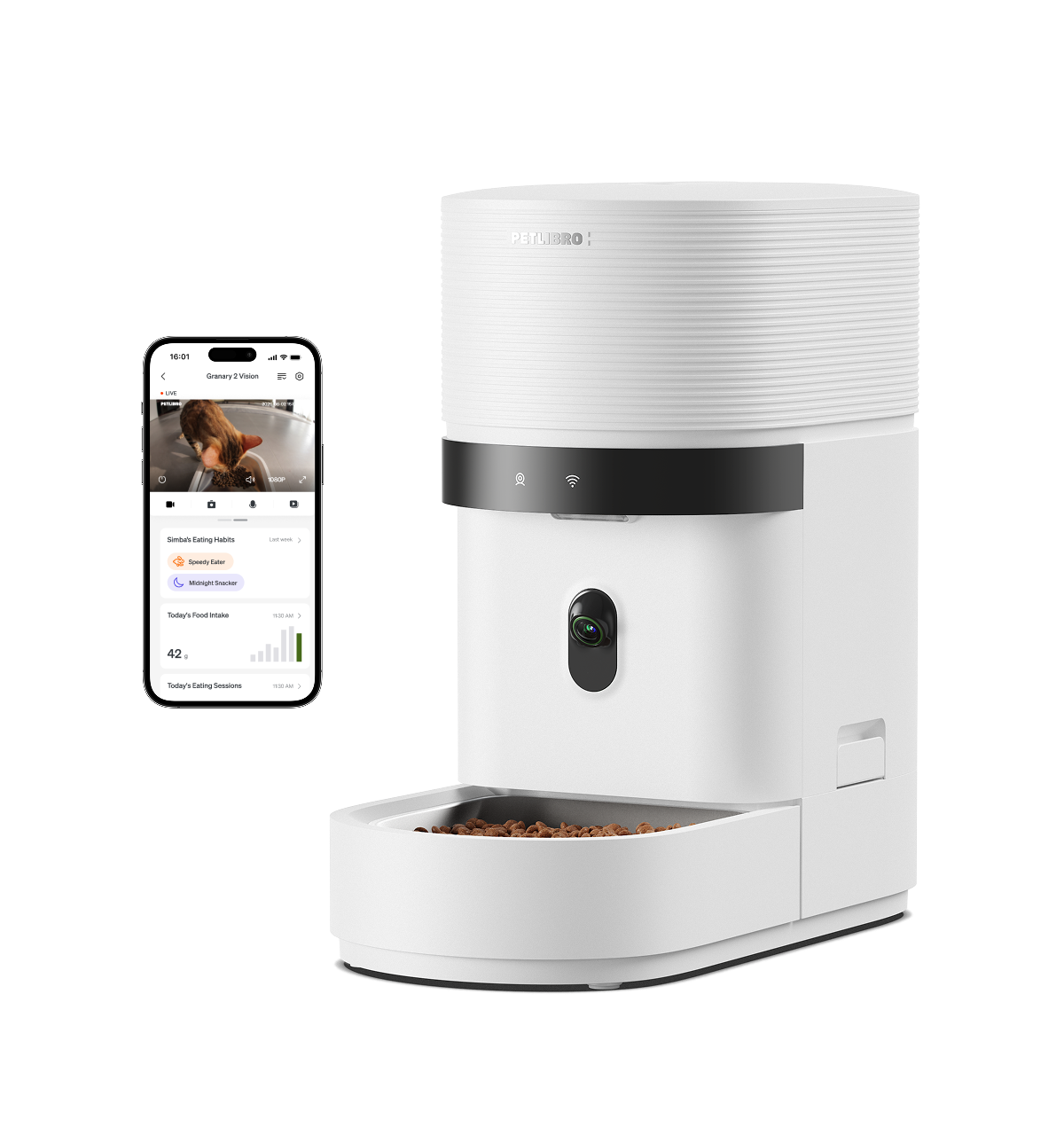
Explore this need in the finder →The single-bowl PETLIBRO Granary 2 Vision PLAF205 is for dry-food scheduling with a camera and a weighing system around one feeding position. Choose it if observing visits and changes in the bowl would help you manage the routine. Choose the Duo configuration for two positions, or Granary 2 X if a lid must control which cat can eat.
A scale changes how you should place the feeder
The single-bowl specification identifies a 5 L reservoir, stainless bowl and hard, flat placement requirement. The floor detail matters: a weighing feature needs a stable installation, so a soft carpet is not an interchangeable feeding surface.
The maker calls for calibration after disassembly and reassembly. Allow space to remove the food parts, return the feeder to a level location and complete that step. If your normal routine involves moving a bowl frequently, consider whether you will reliably restore the measuring arrangement each time. More information is useful only when the appliance is set up to collect it properly.
One bowl and two bowls are different choices
The manufacturer's model comparison distinguishes AF205 single bowl from AF205-D Vision Duo. This assessment covers the single-bowl package. Two cats can visit it at different times, but there is still only one feeding position and one shared food supply.
For simultaneous bowls, compare the Vision Duo. For a pet-specific barrier, compare Granary 2 X. Camera recognition in an activity record should not be mistaken for a lid that physically stops another cat reaching food.
Two feeding patterns to think through
The product describes scheduled feeding and a refill mode that responds to food remaining in the bowl while observing a configured daily limit. Decide whether you want food presented at selected times or replenished for a cat that grazes. Those patterns can produce different practical results even when the same daily amount is chosen.
Observe the first routine with your own food and the cat present. A change in bowl weight is useful context, but does not independently prove every gram was swallowed by a particular animal. Check for displaced food and other pets approaching before drawing conclusions from a single reading.
Food compatibility and cleaning
The documented food range is dry kibble between 2 and 15 mm, with warnings about oversized and irregular shapes. A cube's dimensions and a crescent's profile can matter even when one measurement looks suitable. Do not place canned food in this reservoir.
The bowl and bowl holder are washable, but the area beneath the holder contains electronics. Keep that area out of rinsing water and recalibrate after reassembly. The empty-bowl calibration instructions explain the separate setup step rather than suggesting that an apparently empty bowl is automatically calibrated.
Camera services and backup need their own checks
The integrated camera provides a view of the feeding area, including night-vision support described by the maker. Recorded history and AI service features can have separate cloud-service requirements. Check the current feature terms for the specific record or insight you want, rather than assuming ownership of the hardware includes every future service.
The built-in rechargeable battery is described as emergency backup, not routine cordless power. PETLIBRO documents continued schedules, Wi-Fi and camera functions during backup, with a manufacturer-tested runtime claim. That is more capable than a feeding-only backup mode, but it does not make the appliance a normal no-outlet recommendation.
When the single-bowl version makes sense
Choose it for dry-food app scheduling, a view of one shared bowl, a suitable level surface and the willingness to maintain calibration. If two feeding positions or protected individual food are essential, use those requirements in the finder. The different Granary names become easier to compare when each requirement points to an actual physical configuration.
Key specifications
Key details at a glance
| Dry-food compatibility | Yes |
|---|---|
| Wet-food compatibility | No |
| Timed meal releases | Yes |
| Pet-specific access control | No |
| Implanted-microchip access | No |
| Compatible collar-tag access | No |
More specifications and setup details
| Powered cooling | No |
|---|---|
| Ice-pack arrangement | No |
| App plans or food targets | Yes |
| Integrated camera | Yes |
| Food weighing in the bowl | Yes |
| Routine battery operation | No |
| Backup for stored meal schedules | Yes |
| Separate simultaneous feeding positions | No |
| Separate food hoppers | No |
| Dry-food hopper volume | 5 L |
| Documented minimum regular-kibble diameter | 2 mm |
| Documented upper regular-kibble boundary | 15 mm |
Use the exact model’s instructions for operating limits, supplied equipment and version differences.
Sources for this review
Sources for this assessment
Compare the options for your routine.
Bring together the food, feeding function, controls and power that matter to you.