Cat feeders · Choose by your needs
Choose a feeder that times meals and protects one cat's access
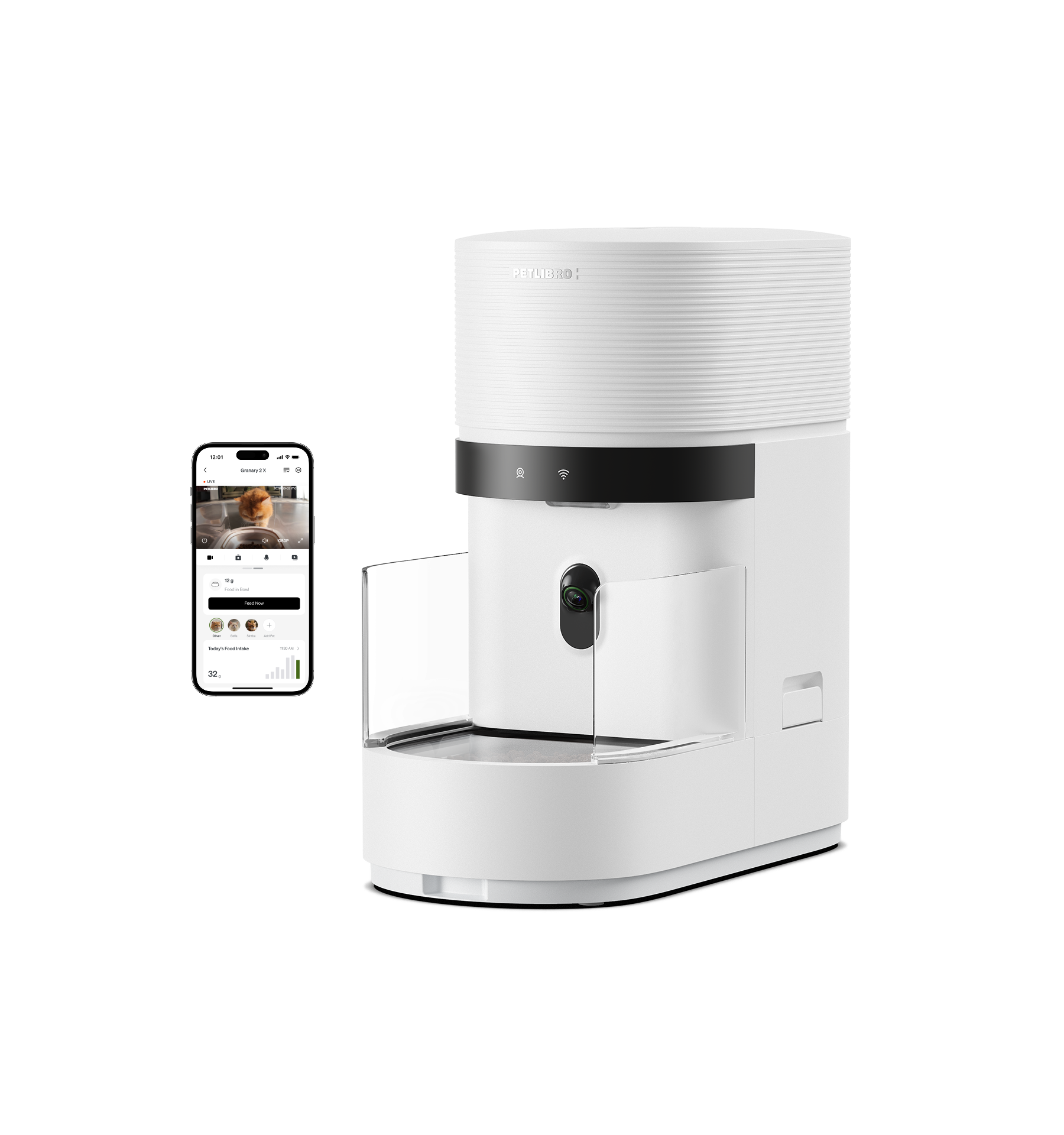
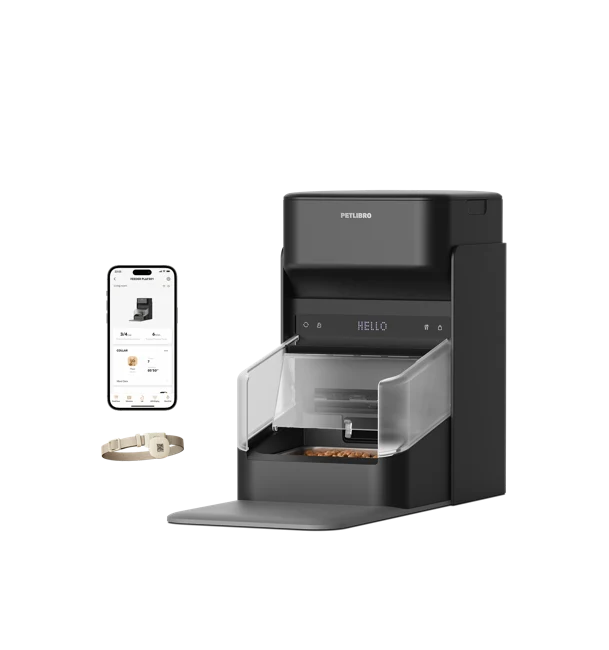
If both scheduled release and pet-specific bowl access are essential, compare the PETLIBRO Granary 2 X PLAF305's visual-recognition lid with PETLIBRO One RFID PLAF301's dedicated collar tag. Both are app-managed dry-food systems; neither reads an implanted microchip, and their recognition methods are not interchangeable. A manual microchip bowl can protect access, but it does not add a meal timer.
- Meals must be released on a schedule
- The bowl must use a documented pet-identification method to control access
Comparison updated 29 October 2026.
Two different ways to recognize the cat
The Granary 2 X PLAF305 uses pet photos for visual recognition and a camera-controlled lid; PETLIBRO One RFID PLAF301 recognizes its dedicated collar tag. Neither exact model reads an implanted microchip. One documents up to ten app-scheduled events per day; the reviewed Granary 2 X material does not establish a daily schedule ceiling. If your required meal count is exact, confirm the X's schedule limit rather than assuming it matches One.
Access control still needs a household check
Before relying on either station, follow the exact setup procedure and supervise initial meals to confirm the intended cat can approach and be recognized. The Granary 2 X requires suitable recognition photos and one bowl position; One RFID pairs one dedicated tag per feeder and requires its reader mat. Neither a camera view nor a schedule alone guarantees that the correct cat eats every portion.
If your cat is microchipped but cannot use these methods
The ordinary SureFeed MPF001 and Closer Pets MiBowl CP500 offer implanted-chip access, but they are manual-fill bowls, not timed dispensers. They are alternatives only if the schedule can be handled separately; keeping both schedule and selective access as hard requirements rules them out.
When to choose something else
- SureFeed Microchip Pet Feeder MPF001: It recognizes compatible implanted microchips or supported tags but is filled by hand and does not release food on a timer.
- Closer Pets MiBowl CP500 microchip feeder: Its microchip or ID-disc lid protects a manually loaded bowl; the exact model has no scheduled portion release.
Questions that change the choice
Can I use my cat's implanted microchip with either timed-access feeder?
No. The Granary 2 X PLAF305 uses visual recognition, while One RFID PLAF301 requires its dedicated collar tag. SureFeed MPF001 and MiBowl CP500 document microchip recognition, but neither schedules meal release.
Does the camera make a Granary 2 X the same as a camera feeder that only lets me watch?
No. The Granary 2 X listing describes its AI camera as recognizing the selected pet and controlling the lid; a monitoring camera that does not control access is not the same feature. Confirm the exact PLAF305 model and follow its recognition setup rather than assuming every camera-equipped feeder is selective.
Will PETLIBRO One keep remote app features during an outage?
The PLAF301 FAQ says emergency cells preserve the schedule while Wi-Fi is disabled. Do not treat schedule continuity as continued remote access.
Do these models handle both wet and dry food?
No wet-food use is established for either exact configuration. The PLAF305 and PLAF301 pages identify dry-food feeders. If you need wet meals too, plan a separate wet-food method rather than assuming one of these protected dry-food stations can also cool or serve wet portions.
Sources for the comparison