
On this page
Your needs, this model
Does it fit your priorities?
Does three-meal mean three timed meals after I leave?
No. One compartment is available immediately. The C300 programs two future openings; a three-future-meal requirement needs a larger tray or another mechanism.
Explore this need in the finder →Will it fit a wet-food routine without an app?
Yes. Wet and dry meals are supported, the ice pack is passive cooling, and the two meal times are programmed on the feeder. Cooling duration still depends on conditions and the food.
Explore this need in the finder →Can it feed two cats separately at once?
The rotating lid presents one compartment. A reference to two cats does not establish two separate feeding positions or pet-specific protection.
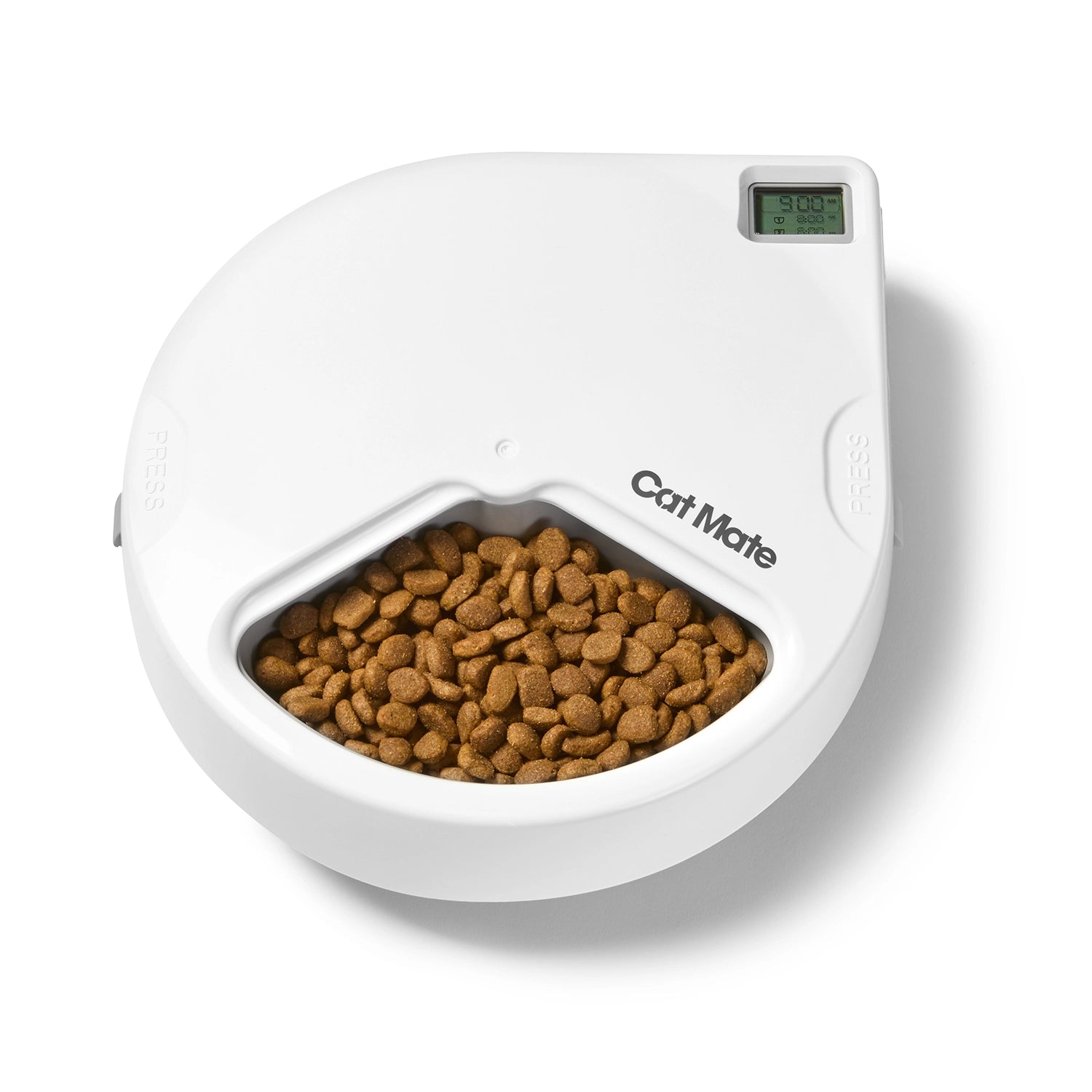
Explore this need in the finder →Choose the Cat Mate C300 for one meal available now and two prepared meals revealed later, using a digital timer on the feeder. It is a sensible small-tray option for wet or dry food when you want an included ice pack and ordinary battery operation. Its three compartments do not provide three future timed meals.
Count two future openings, not three
The C300's uncovered starting compartment is already available to the cat. The timer moves the tray to the other two compartments at the programmed times. This is particularly relevant when planning breakfast and lunch after serving an initial evening meal: write down which serving is accessible immediately and which two are still covered.
The manufacturer's product page makes that distinction explicit. For a longer sequence, the C500 provides more covered future compartments. For repeated dry-food dispensing from a reservoir, compare a hopper instead. A larger tray and a larger hopper solve different refill problems.
Daily clock times have their own rules
The C300 instructions describe two meal-time settings, entered in ten-minute increments. Those clock times repeat daily. You cannot build a different timetable for tomorrow simply by treating each compartment as a dated appointment.
That makes a repeating early breakfast straightforward in principle, but a changing shift pattern deserves a little planning. Put the actual times on paper, check which programmed time comes next, and watch a trial rotation. Local buttons keep setup independent of a phone, but they still require you to understand how the next scheduled opening is selected.
Prepared food with passive cooling
An included ice pack provides passive cooling beneath the tray. The model's support FAQ confirms wet-food compatibility and explains that cooling duration depends on the room and placement. Do not translate the number of compartments into a safe number of days for wet food.
Use the actual food's storage guidance when planning the schedule. Keep the feeder away from direct sunlight and remember that the compartment already open to the cat is a serving bowl. Cooling the covered tray is a different question from how long food remains suitable after it is exposed.
Battery operation is a placement advantage
Three AA batteries run the C300 in normal use. There is no mains-to-battery changeover to arrange, and no router needed to set the meal times. This is useful if the preferred feeding corner has no outlet. The manual's battery-life estimate is a manufacturer estimate, not a guarantee that a particular set of cells will last that long.
Check the display, battery indicator and tray alignment as part of refilling. Remove the lid and bowl for washing; keep the electronic base out of water. Reinstall the tray carefully and confirm the expected next compartment. Simple cleaning access is helpful only if the reassembled mechanism still presents the food correctly.
One feeding opening is still shared access
The maker describes the feeder as suitable for two cats, but the covered rotating tray presents one compartment at a time. It does not identify which cat eats, divide food between animals or establish two independently protected positions. If one cat steals another's portion, start with selective access. If the requirement is two simultaneous positions, use that separate finder choice.
The C300 earns its place through a focused combination: prepared meals, two future clock-based openings, an ice pack and local battery operation. Choose it when those limits fit the daily routine, rather than because three compartments sound like three independent automated feeding stations.
Key specifications
Key details at a glance
| Dry-food compatibility | Yes |
|---|---|
| Wet-food compatibility | Yes |
| Timed meal releases | Yes |
| Pet-specific access control | No |
| Powered cooling | No |
| Ice-pack arrangement | Yes |
More specifications and setup details
| App plans or food targets | No |
|---|---|
| Local meal-schedule programming | Yes |
| Routine battery operation | Yes |
| Separate simultaneous feeding positions | No |
| Separate food hoppers | No |
| Maximum documented scheduled meals per day | 2 |
| Future meal openings per filled load | 2 |
Use the exact model’s instructions for operating limits, supplied equipment and version differences.
Sources for this review
Sources for this assessment
Compare the options for your routine.
Bring together the food, feeding function, controls and power that matter to you.