
On this page
Your needs, this model
Does it fit your priorities?
Can I use a 5 GHz connection for the camera?
The exact HV10P page documents dual-band Wi-Fi and an integrated camera in the normal powered setup.
Explore this need in the finder →Does HV10P provide two feeding positions?
This assessment covers the single-bowl layout. Choose the separately documented HV10DP configuration if two positions are essential.
Explore this need in the finder →Is 15 mm dry food established for this exact model?
No exact HV10P kibble range was established in the sources read. A nearby HV10/HV10DP manual is not automatically the same labelled unit.
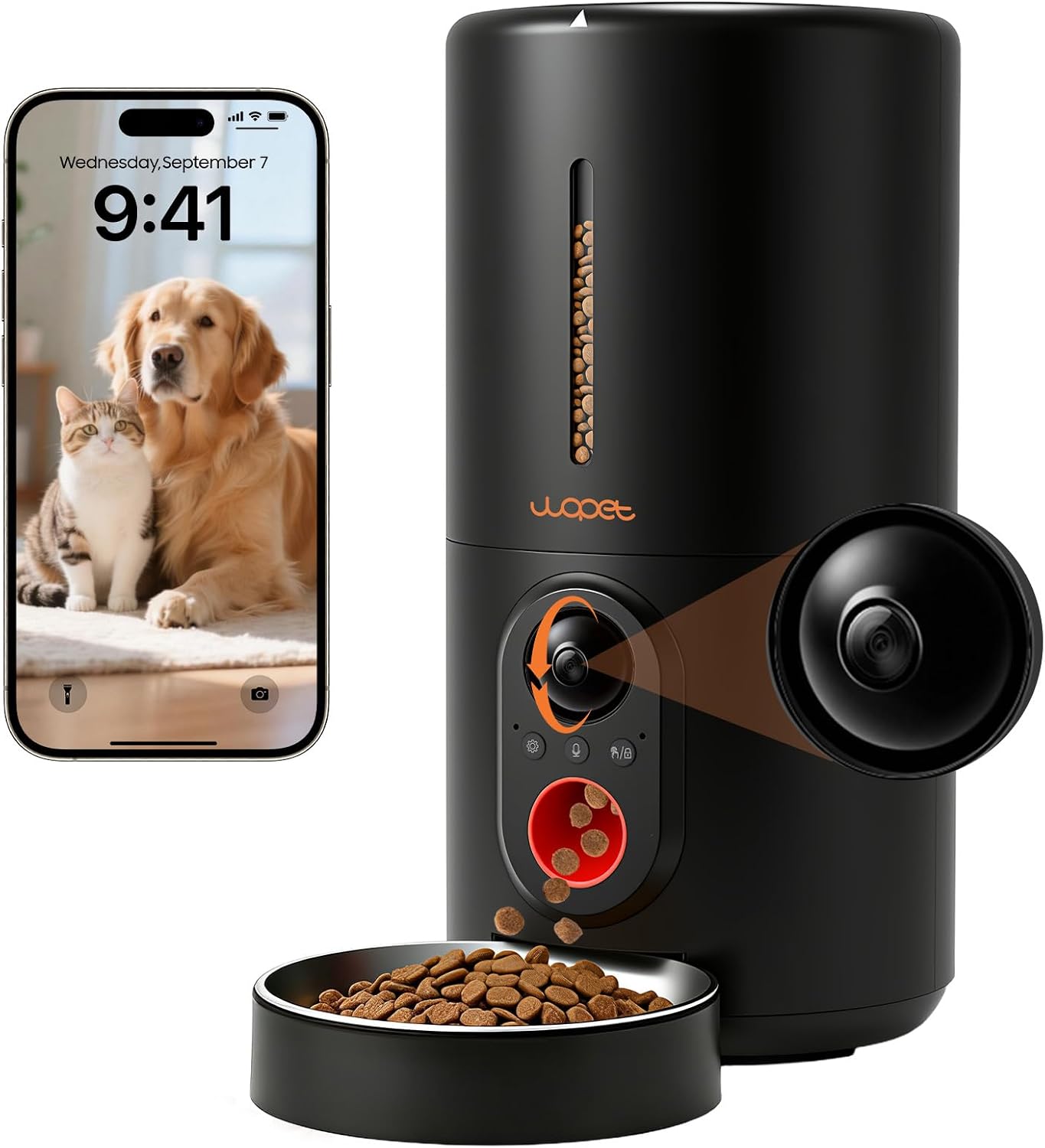
Explore this need in the finder →WOpet Heritage View HV10P suits one dry-food feeding position with app scheduling and an adjustable camera view. It is the single-bowl version to compare when seeing the feeding area matters more than adding another bowl. Match HV10P explicitly rather than borrowing the neighboring HV10 or dual-bowl manual's specifications.
A camera with a job beyond the meal log
The exact HV10P page documents a built-in camera, night vision and vertical adjustment. That can be useful when the bowl's position makes a fixed view inconvenient. Check the intended location with the actual appliance rather than treating the advertised angle as proof that every part of the room will be visible.
Decide what you need to see: food reaching the bowl, a pet approaching or the surrounding area. A wider picture is not a substitute for a pet-selective barrier. Another animal can still eat from the open feeding position.
Ten daily appointments through WOpet Life
The current model page describes up to ten daily meals, with plan changes in WOpet Life. It supports 2.4 and 5 GHz Wi-Fi. That makes it a candidate when dual-band compatibility and remote adjustments are part of the routine.
Check the network in the intended feeding location and observe a full trial timetable. App access for several family members can be convenient, but agree who changes the plan and who gives extra servings. Several people being able to dispense food does not establish a single coordinated daily allowance.
One bowl around a 6 L supply
The reviewed HV10P page identifies a 6 L reservoir and a single feeding layout. For two simultaneous bowls, compare HV10DP. Both layouts share food rather than maintaining two independently filled recipes.
The exact regular-kibble boundary is not established by the HV10P material read for this assessment. We do not import a neighboring model's range into a strict food-size match. Before buying for oversized or unusual food, check the precise manual supplied for the labelled unit.
Backup feeding and remote viewing are different requirements
WOpet describes an adapter and three optional D cells for feeding during power interruptions. Install usable cells if that resilience is part of the purchase. Confirm a stored meal with the intended food and settings rather than relying on the dual-power label alone.
The exact page does not establish live camera operation on battery power. Choose the normal plugged-in setup for the connected camera workflow, and do not use this assessment as a promise of routine cordless monitoring.
Recording and privacy should be deliberate choices
The page describes two-way audio, a recorded meal call, app privacy controls and memory-card video storage. Those are different functions. A short meal call is an automatic cue, while a live conversation needs a working connected session.
Check the storage equipment included with the exact package and how recording is configured. Place the camera to view the intended feeding area, and review account sharing and privacy settings before giving others access. These decisions affect how useful the camera will be in everyday use.
Which alternative changes the decision?
Choose HV10P for one shared feeding position, a suitable dual-band network and a real need for camera observation. Choose PIXI Vision 43753 for another documented camera arrangement with a different reservoir and food boundary. Choose an access-controlled feeder when the difficult problem is food stealing.
The full model code matters because similar Heritage names can conceal different bowls, controls and manuals. Use the camera to support a suitable feeding routine, rather than let video features distract from food compatibility, power and who can reach the bowl.
Key specifications
Key details at a glance
| Dry-food compatibility | Yes |
|---|---|
| Timed meal releases | Yes |
| Pet-specific access control | No |
| App plans or food targets | Yes |
| Integrated camera | Yes |
| Routine battery operation | No |
More specifications and setup details
| Backup for stored meal schedules | Yes |
|---|---|
| Separate simultaneous feeding positions | No |
| Separate food hoppers | No |
| Maximum documented scheduled meals per day | 10 |
| Dry-food hopper volume | 6 L |
Use the exact model’s instructions for operating limits, supplied equipment and version differences.
Sources for this review
Sources for this assessment
Compare the options for your routine.
Bring together the food, feeding function, controls and power that matter to you.