
On this page
Granary 2 X for visual recognition plus timed dry meals
The exact PLAF305 page combines app-managed dry meals with photo-based recognition that controls the bowl lid, rather than merely showing video. It is the visual-access alternative in the timed-and-protected comparison; setup and supervised confirmation matter, and the reviewed material does not establish its daily schedule ceiling.
Your needs, this model
Does it fit your priorities?
Can it schedule meals and control access to the bowl?
Yes. The X combines app-managed feeding with a motorized lid for one visually recognized designated pet. Recognition setup and a supervised trial remain important.
Explore this need in the finder →Is it an implanted-microchip feeder?
No. Its camera uses reference photos for visual recognition. Choose a documented chip-reading feeder for an implanted-microchip requirement.
Explore this need in the finder →Is 16 mm kibble a confirmed match?
No. The exact specification says2–15 mm while a FAQ says2–18 mm. The common2–15 mm interval is used; larger pieces need exact clarification rather than an assumed fit.
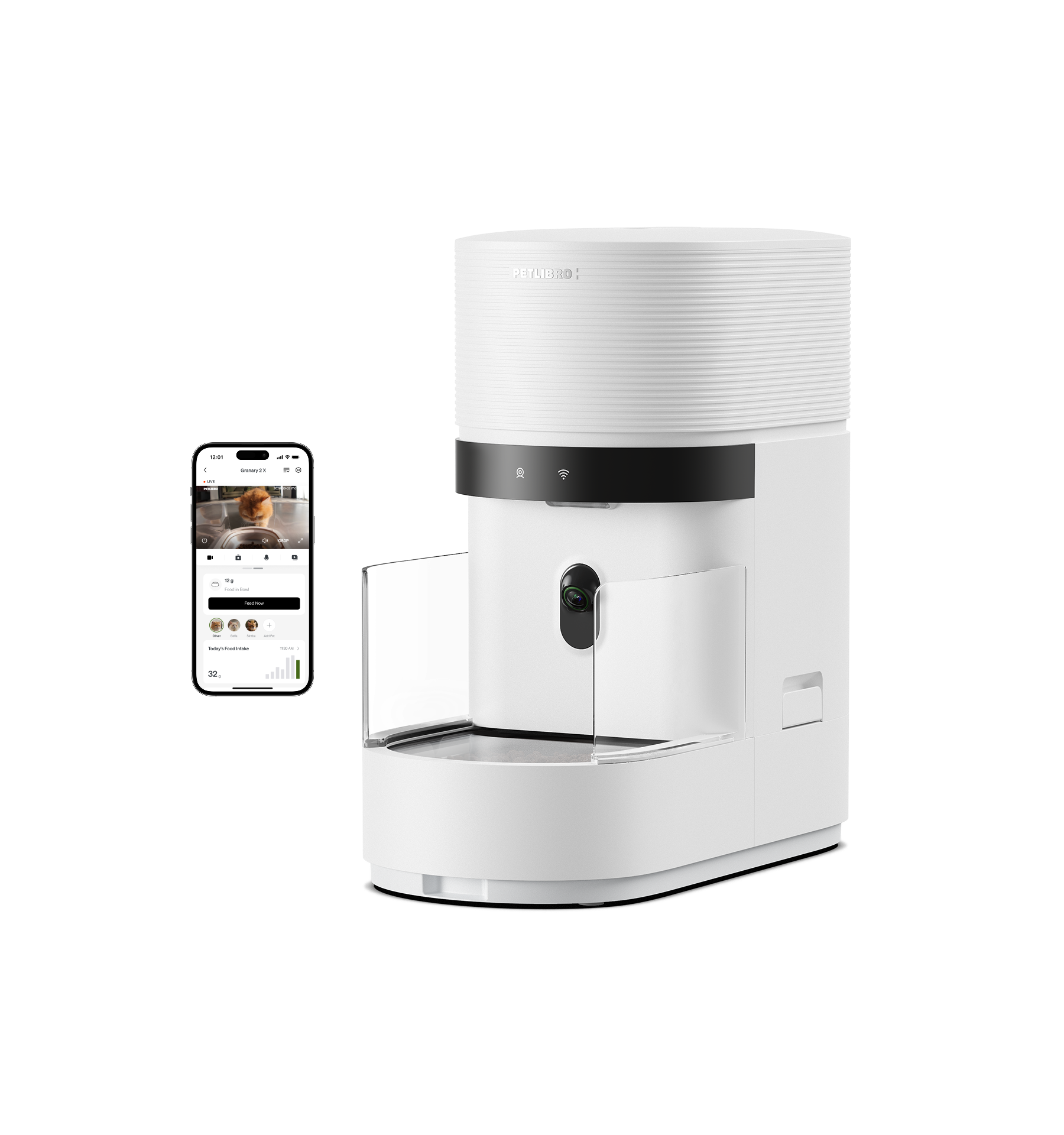
Explore this need in the finder →PETLIBRO Granary 2 X PLAF305 is for scheduled dry-food feeding with a camera-controlled lid that admits one designated pet. It combines two jobs often separated in other feeders: releasing food on a plan and controlling access to the bowl. Choose it for visual pet recognition, not as a substitute for an implanted-microchip reader.
A real access barrier changes the comparison
The Granary 2 X product page describes a motorized lid opened for the assigned animal. That is different from a camera that merely labels visits to an exposed bowl. It makes the X relevant when meal timing and food stealing are both part of the problem.
The recognition method matters. The maker uses pet photographs and camera identification rather than a compatible collar disc or implanted-chip reader. If a particular identification technology is essential, select it explicitly in the finder. Visual recognition should not silently satisfy a microchip requirement simply because both involve identifying a cat.
Set up the pet profile as carefully as the schedule
Clear reference photographs from several angles are part of the documented setup. Think about whether the feeding location gives the camera a usable view and whether another cat will crowd the entrance. There is no independent recognition-accuracy test behind this assessment, so introduce the feeder under observation.
The maker provides recognition, manual and adaptation arrangements, including an Always Open mode that reacts when a non-designated animal approaches. Choose the intended mode deliberately. An introductory mode is useful only when you understand how access differs from the final protected-feeding routine.
One bowl around one dry-food supply
The 5 L tank holds one food supply. A selective lid does not create two independently portioned bowls or store two recipes. If two animals need different diets, plan separate feeding arrangements and compare how they will be placed, refilled and checked.
The series comparison distinguishes the X from the Vision and Vision Duo. Those camera models have other layouts, while the X's deciding feature is exclusive access. A larger exposed dual-bowl layout would solve a different need.
Use the supported food range conservatively
The exact specification says 2–15 mm dry kibble, while a later FAQ says 2–18 mm. The shared 2–15 mm interval is the range used for matching here; a 16–18 mm requirement is not treated as confirmed. Both descriptions warn about oversized or irregular pieces.
Check the actual shape and a full trial routine, not just one diameter measurement. The product's bowl-scale features also require a hard, level surface and calibration after reassembly. Consider access, dispensing and weighing as three parts of the installation that need to work together.
Offline behavior and backup are separate situations
PETLIBRO says stored schedules continue without an internet connection and that the X can perform recognition and lid operation on the device while offline. Remote app control still needs connectivity. Losing internet is therefore different from losing the power supply.
The built-in rechargeable battery is described as emergency backup, with a maker-tested runtime claim and continued feeding, camera and recognition features. The manufacturer explicitly says it is not the primary power source. Choose another appliance if normal operation without an outlet is essential.
Which household is it for?
Choose the X when dry-food scheduling and one-pet access are both essential, and you are comfortable with camera-based identification and its setup. Check current cloud-service terms separately for recorded-video and AI-history features. Ownership of the feeder does not automatically establish every service entitlement.
Compare PETLIBRO One RFID for a collar-tag-based arrangement. Compare MiBowl for an implanted-chip-compatible prepared bowl without timed dispensing. The best choice depends on which identification method and feeding job the household actually needs.
Key specifications
Key details at a glance
| Dry-food compatibility | Yes |
|---|---|
| Wet-food compatibility | No |
| Timed meal releases | Yes |
| Pet-specific access control | Yes |
| Implanted-microchip access | No |
| Compatible collar-tag access | No |
More specifications and setup details
| Visual recognition controlling bowl access | Yes |
|---|---|
| Powered cooling | No |
| Ice-pack arrangement | No |
| App plans or food targets | Yes |
| Integrated camera | Yes |
| Food weighing in the bowl | Yes |
| Routine battery operation | No |
| Backup for stored meal schedules | Yes |
| Separate simultaneous feeding positions | No |
| Separate food hoppers | No |
| Dry-food hopper volume | 5 L |
| Documented minimum regular-kibble diameter | 2 mm |
| Documented upper regular-kibble boundary | 15 mm |
Use the exact model’s instructions for operating limits, supplied equipment and version differences.
Sources for this review
Sources for this assessment
Compare the options for your routine.
Bring together the food, feeding function, controls and power that matter to you.
Your needs, this model
Feeders with bowl weighing as a useful preference
Choose it when: PLAF305 combines bowl weighing with photo-based pet recognition controlling the lid, unlike the standard no-camera PLAF105.
Feeders with bowl weighing as a useful preference →Feeders with documented food weighing in the bowl
Choose it when: PLAF305 adds a lid controlled by on-device visual pet recognition to the scale, distinguishing it from an open-bowl monitor.
Feeders with documented food weighing in the bowl →Choose a feeder that times meals and protects one cat's access
Choose it when: Choose the Granary 2 X when your cat should be recognized visually rather than by a wearable tag, and you want the same dry-food feeder to schedule meals and control the bowl lid.
Choose a feeder that times meals and protects one cat's access →